
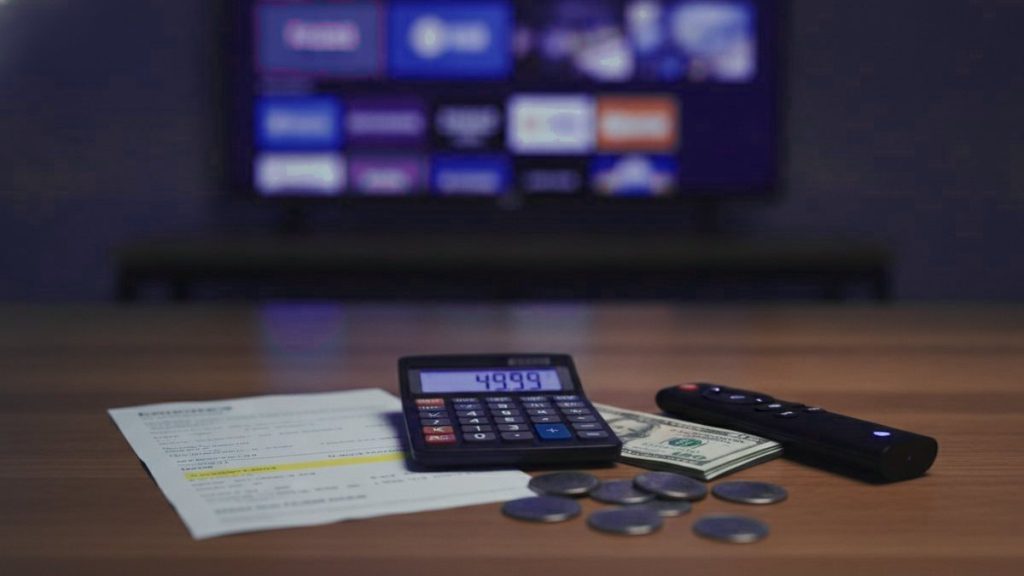
A credible IPTV subscription costs roughly $12 to $20 a month, or $55 to $90 for a year, which works out between $5 and $8 monthly. Well below that is usually a reseller account that will not survive its first busy weekend. Well above it is charging you for marketing rather than servers.
The quick answer
Around $15 for one month, around $69 for twelve. The annual figure is where most subscribers land, and a single pay-per-view card would pass it on its own.
The comparison worth doing first
Most articles about IPTV pricing compare it to a general cable bill. For anyone here because of sport, the honest comparison is narrower and rather more damning.
A cable tier carrying comparable live sport runs $80 to $150 a month. The pay-per-view nights are charged on top, and a single UFC numbered card bought officially costs roughly what four months here would. Add a couple of boxing nights across a year and you have passed the price of a twelve-month subscription without having watched a single league fixture.
That is the arithmetic that moves people, and it is worth seeing plainly rather than being sold. If you buy two pay-per-view nights a year and watch nothing else, the sums are closer than the marketing suggests. If you follow a league week to week as well, they are not close at all.
What the market charges
| Term | Typical range | Per month | Suits |
|---|---|---|---|
| 12 months | $55 – $90 | $5 – $8 | Where nearly everybody ends up |
| 6 months | $40 – $55 | $7 – $9 | Half a season, hedging sensibly |
| 3 months | $25 – $35 | $8 – $12 | One competition, start to finish |
| 1 month | $12 – $20 | $12 – $20 | The first purchase, always |
We price inside those bands on purpose rather than underneath them, and each figure is printed on the pricing page instead of being quoted privately on request.
Why a year costs so much less per month
The discount is large enough to look suspicious, so it is worth explaining. Three genuine costs fall away.
Payment handling. Every transaction carries a fee, and on a $15 sale that fee is a meaningful slice of the margin. Collecting once instead of twelve times removes eleven of them.
Support load. The overwhelming majority of support happens in the first week of an account: installing a player, entering credentials, waiting for the guide. An annual subscriber generates that once a year rather than monthly.
Capacity planning. This one matters more here than in most businesses. Match-day headroom has to be provisioned in advance, and provisioning is guesswork when subscribers drift in and out unpredictably. Annual subscribers are a known quantity, and known quantities are cheaper to serve.
None of that makes twelve months the right opening purchase. Buy the year second, after a full weekend of sport has gone by.
What a cheap year actually costs you
There is a persistent tier advertising a year for $20 or $25, and it deserves precision rather than dismissal. Most are resellers buying credits in bulk and pricing below sustainable levels to shift volume. The account genuinely works on the day you buy it.
It is the weeks afterwards that fail, and they fail in a particular pattern worth recognising. The server has been sold several times over, so the picture holds all week and folds at kick-off, which is the only time you actually wanted it. Nobody answers, because answering costs money and none was budgeted. And on the day the upstream provider closes the reseller down, every account they ever sold stops together, usually mid-season.
The arithmetic is simple. Servers, bandwidth and staff have a cost floor, and for sport that floor is concentrated into a few hours a week when everybody arrives simultaneously. A provider charging $25 a year has not paid for that capacity, and there is only one place the shortfall can show.
Hardware: usually nothing at all
| Item | One-off cost | Worth buying? |
|---|---|---|
| Whatever is already in the room | $0 | Begin here. A 2016+ smart set, a phone or a laptop all qualify |
| Ethernet adapter | $10 – $15 | Cures more match-day stuttering than every other line here |
| Fire TV Stick 4K | $30 – $50 | The obvious step up for an ageing television |
| Android TV box | $40 – $90 | More adaptable, and TiViMate multi-view works properly |
| Formuler / MAG | $120 – $180 | Justifiable on the set the sport actually goes on |
If you buy exactly one thing, make it the Ethernet adapter rather than a faster box. Most stuttering is a network problem wearing a hardware costume, and it is worst at precisely the hour every household nearby is streaming the same fixture.
The app is free
People set money aside for the player and have no need to. IPTV Smarters Pro is free on every platform. TiViMate has a free tier and a Premium one at roughly $10 a year. Smart IPTV charges a small once-only fee per television, paid to its developer. That is the whole software bill, and none of it reaches whoever sells you the subscription.
The one line worth paying is TiViMate Premium, and only for one reason: multi-view. Two fixtures side by side on a Saturday afternoon is the single feature people cite when they say they will not go back. Our player guide covers which app belongs on which device.
A worked first year
| Item | Cost |
|---|---|
| Twelve months | $69 |
| Fire TV Stick 4K | $40 |
| Ethernet adapter | $12 |
| First year total | $121 |
| Year two onward | $69 |
A cable package carrying comparable sport passes $121 inside the first two months, before any pay-per-view night is added. That gap, rather than any channel count, is the honest argument.
Is it worth paying for?
Probably yes if you follow live sport across more than one competition, buy pay-per-view nights, or are paying a large package bill mainly to reach a handful of sports channels.
Probably not if box sets on demand are essentially all you watch. A mainstream platform does that job better with fewer parts to go wrong. Live television is where this technology earns its keep, and buying a capability you never touch is poor value whatever the sticker says.
What changes the total in practice
Two things move the real figure more than the headline price, and neither appears on a pricing page.
The first is the screen count. Households consistently underestimate it, buy a one-screen plan, and discover on the first busy Saturday that two rooms wanted two different fixtures. Upgrading mid-term only charges the difference for the time remaining, so it is not an expensive mistake, but it is worth counting honestly at the outset. The second is hardware you did not budget for, which in practice means the $12 Ethernet adapter almost everybody ends up buying. Neither is large, and together they are the gap between the price you expected and the price you paid.
Paying sensibly
- Take one month first, however good the yearly figure looks beside it.
- Use the trial on a real fixture, not a quiet afternoon.
- Count the screens honestly. Saturdays are busier than people remember, and a one-screen plan is where that gets discovered.
- Never send card details in a chat window, with us or with anybody else.
- Read the refund terms before paying. Ours run to seven days.
- Be wary of countdown timers. A real service is still there tomorrow at the same price.
Frequently asked questions
How much should I expect to pay?
Around $15 for a single month and around $69 for twelve, which is near $5.75 a month. The credible market band is $12 to $20 monthly and $55 to $90 annually. Prices far below that are usually resellers pricing below cost, and prices far above are paying for marketing rather than servers.
How does it compare to a cable sports tier?
A cable tier carrying comparable live sport runs $80 to $150 a month with pay-per-view charged on top. A year here is $69 in total with the fight nights included. Even allowing generously for the difference in polish, the gap is the reason most people switch.
Why is a year so much cheaper per month?
Three real costs fall away: payment handling collected once rather than twelve times, support load which concentrates almost entirely in the first week, and capacity planning, which is guesswork when subscribers come and go. The discount is genuine, and it is still not the right first purchase.
What does a $25 year actually get me?
An account that works on the day you buy it and an oversold server thereafter. These are resellers pricing below sustainable levels with no support budgeted for, and the failure shows at kick-off rather than randomly. When the upstream provider cuts them off, every account they sold stops at once.
Do I need to buy hardware?
Usually not. A smart television from 2016 onward, a phone or a laptop will all work. If you do buy, a Fire TV Stick at $30 to $50 covers most cases, and a $12 Ethernet adapter fixes more match-day buffering than any more expensive box will.
Set up before the next kick-off
Order on WhatsApp and the login lands in under 15 minutes, backed by a 7-day refund window.
Related articles
How Much Internet Speed Live Sport on IPTV Really Needs
How much bandwidth live sport on IPTV needs per HD, FHD and 4K stream, how to add up a household, why stability…
September 19, 2026How to Put Several Live Games on One Screen With IPTV
Watching two, three or four games at once takes more than the right app. How TiViMate multi-view works, why every tile uses…
September 19, 2026Why the Score Reaches Your Phone Before Your IPTV Stream
An IPTV sports stream normally runs 15 to 60 seconds behind live. Where those seconds come from, how to trim them with…